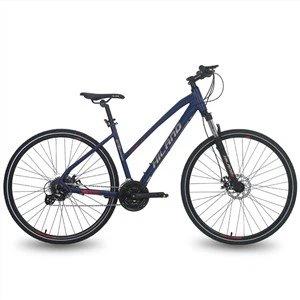
Picking the right size hardtail mountain bike can be a real head - scratcher, especially if you're new to the world of off - road cycling. As a hardtail mountain bike supplier, I've seen it all when it comes to customers getting the sizing wrong and having a less - than - ideal riding experience. So, let's break it down and figure out what size hardtail mountain bike you should get.
Why Size Matters
First off, why does the size of your hardtail mountain bike even matter? Well, getting the right size bike is like finding the perfect pair of shoes. If they're too big, you'll be all over the place, and if they're too small, you'll be cramped and uncomfortable.
A bike that's the wrong size can lead to a bunch of problems. You might have trouble reaching the handlebars or pedals, which can affect your control on the trails. It can also cause discomfort in your back, neck, and knees over time. And let's not forget about performance. A well - sized bike allows you to pedal efficiently, transfer power better, and maneuver through tricky terrain with ease.
Measuring Your Body
Before you start looking at different bike sizes, you need to know your own body measurements. The two most important measurements are your inseam and your height.
Inseam Measurement
Your inseam is the distance from your crotch to the floor. To measure it, stand against a wall with your feet about six inches apart. Place a book between your legs, pressing it firmly against your crotch just like the saddle of a bike. Then, measure from the top of the book to the floor. Make sure to measure in centimeters for the most accurate sizing.
Height
This one's pretty straightforward. Just stand upright against a wall and measure from the floor to the top of your head. Your height can give you a general idea of what frame size might work for you, but the inseam measurement is usually more crucial.
Frame Size and Your Body
Now that you've got your measurements, let's talk about how they relate to bike frame sizes.
Small Frames
Small frames are generally suitable for riders who are shorter in height, usually around 5'0" - 5'5" (152 - 165 cm). If your inseam is on the shorter side, say around 27 - 29 inches (68 - 74 cm), a small frame might be a good fit. Smaller frames are more nimble and easier to maneuver, which can be great for technical trails. If you're interested in a small - sized bike, you can check out our Child Mountain Bike 20 Inch Cycle For Youth, which is designed for younger or shorter riders.
Medium Frames
Medium frames are a popular choice for a wide range of riders. They're typically good for those with a height between 5'5" - 5'10" (165 - 178 cm) and an inseam of around 29 - 31 inches (74 - 79 cm). A medium frame offers a good balance between agility and stability. It gives you enough room to move around on the bike but isn't too big to handle. We have some great Aluminum Alloy Frame Mountain Bike in medium sizes that are lightweight and durable.
Large Frames
If you're taller, say 5'10" - 6'2" (178 - 188 cm) with an inseam of around 31 - 33 inches (79 - 84 cm), a large frame could be the right pick. Large frames provide more stability at high speeds and are better suited for riders with longer arms and legs. However, they can be a bit less maneuverable than smaller frames. For those looking for a large - sized hardtail, our Best Price Wholesale Steel Frame Mtb offers a sturdy and reliable option.
Extra - Large Frames
Extra - large frames are for the really tall riders, usually 6'2" and above (188 cm+). If your inseam is over 33 inches (84 cm), an extra - large frame will give you the space you need to ride comfortably. But keep in mind that these bikes can be heavier and more challenging to handle in tight spots.
Test Riding
No matter how accurate your measurements are, there's nothing like a test ride to see if a bike really fits you. When you test ride, pay attention to how you feel on the bike. Can you reach the handlebars and brakes easily? Do your feet touch the ground when you stop? Is your back and neck comfortable in the riding position?
A proper riding position means that your knees should have a slight bend when the pedals are at the lowest point. Your arms should be relaxed, not stretched out too far or cramped up. If you feel any pain or discomfort during the test ride, it might be a sign that the bike isn't the right size for you.
Other Factors to Consider
Riding Style
Your riding style also plays a role in choosing the right bike size. If you're into cross - country riding, you might prefer a slightly smaller frame for better acceleration and climbing. On the other hand, if you're more into downhill or enduro riding, a larger frame can provide more stability at high speeds.


Handlebar Width
The width of the handlebars can impact how the bike feels. Wider handlebars give you more control, especially on technical trails. But if they're too wide, they can be cumbersome and affect your ability to navigate through tight spaces.
Stem Length
The stem is the part that connects the handlebars to the bike frame. A shorter stem can make the bike more agile, while a longer stem can give you a more stretched - out riding position. You might need to adjust the stem length to get the perfect fit for your body and riding style.
Conclusion
Picking the right size hardtail mountain bike isn't an exact science, but by taking your body measurements, considering your riding style, and going for a test ride, you can find the bike that's just right for you. As a hardtail mountain bike supplier, I'm here to help you make the best choice. Whether you're looking for a small - sized bike for a young rider, a medium - sized all - rounder, or a large - sized beast for the trails, we've got you covered.
If you're interested in purchasing our hardtail mountain bikes in bulk, we're open for business. We offer high - quality bikes at competitive prices. Don't hesitate to reach out for a procurement discussion. We're eager to work with you and help you find the perfect bikes for your needs.
References
- "Bicycle Fit: An In - Depth Guide" by Sheldon Brown.
- "Mountain Biking: The Complete Guide" by various authors.